
Who Started No Code and How Has It Evolved Ever Since?
No Code is probably one of the most used buzzwords today. But… did you know that the first ever No Code tool was built in the 1980s?? Probably not!


So, what’s all the tea behind the first-ever No Code platform? Let’s find out :)
The History of No Code - The First Ever Platform!
For those who are aware, No Code could mean a lot of things to a lot of people however, the general public view (including ours) defines No Code in this way -
No Code platforms let you build apps or perform tasks without writing code which otherwise would have required coding. So in short… anyone can be a developer! And yes, you heard it right.
The first-ever No Code platform was built in 1985, and it is none other than the iconic Microsoft Excel! Excel allowed users to create formulas and macros and manipulate data without writing any code literally from that early on.

Do you know what’s more interesting?
The first version of Microsoft Excel was released for Mac (ironic, ironic!) and for Windows in 1987.
However, the term "No Code" was first used in the early 2000s to describe platforms that made it possible to build websites and applications without writing any code.
Not surprisingly, though, the No Code movement really took off in recent years.
But how exactly?
How Has No Code Evolved Ever Since The First Platform?
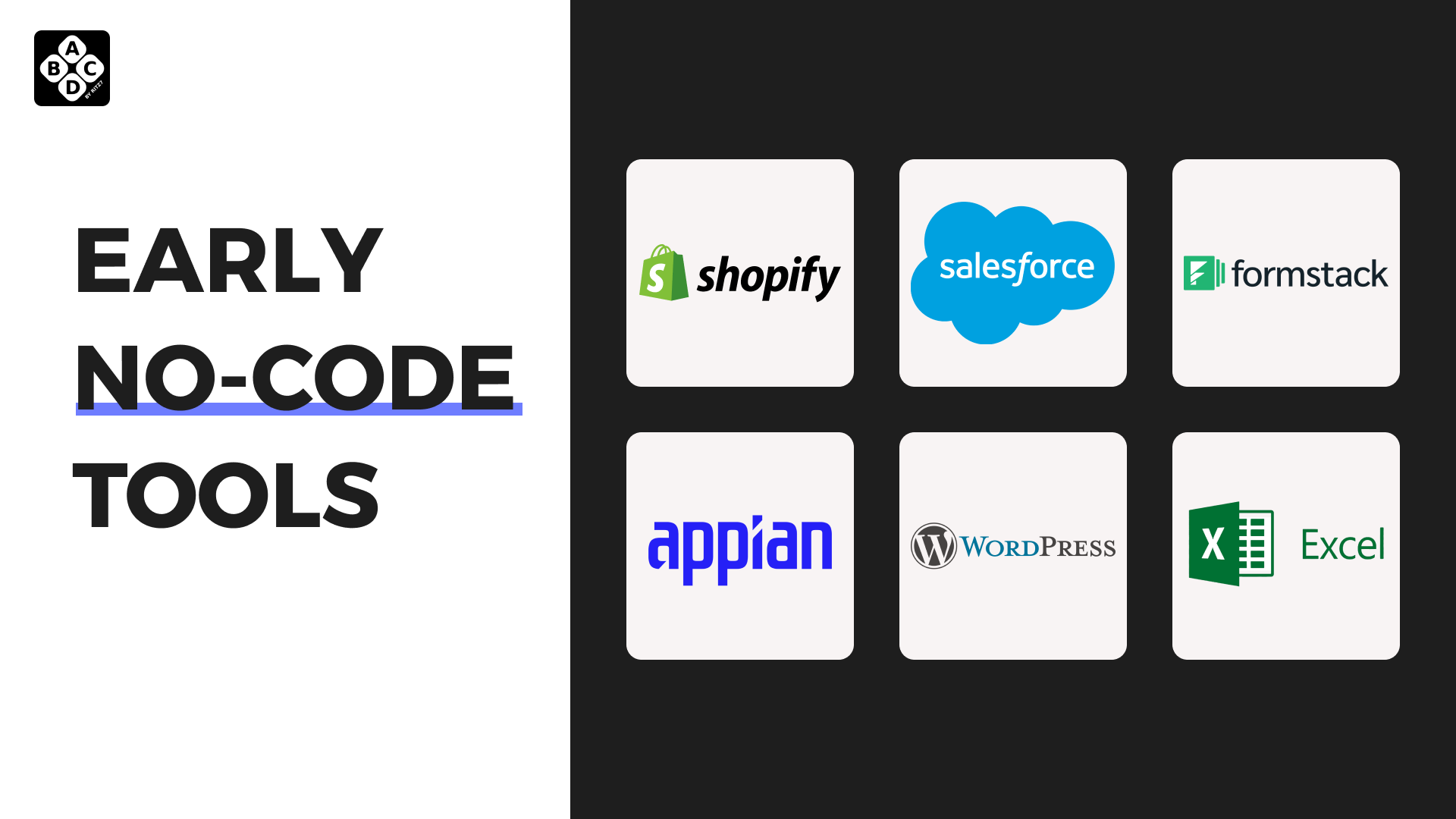
In the early 2000s, a few other No Code tools were released - Appian, Salesforce, WordPress, Shopify, Formstack, and so on!
This made it possible for businesses and organizations to easily build business applications and websites, collect data, and automate workflows without having to hire even a single developer.
However, for the majority of businesses and individuals out there, No Code was still an alien concept and often tabooed as “inefficient” as compared to custom-coded solutions.
It was not until the early 2010s that the No Code movement began to gain momentum.
This was due to a number of factors -
The increasing demand for software development skills
The decreasing availability of those skills (in a competent way, obviously)
The rising cost of hiring developers!
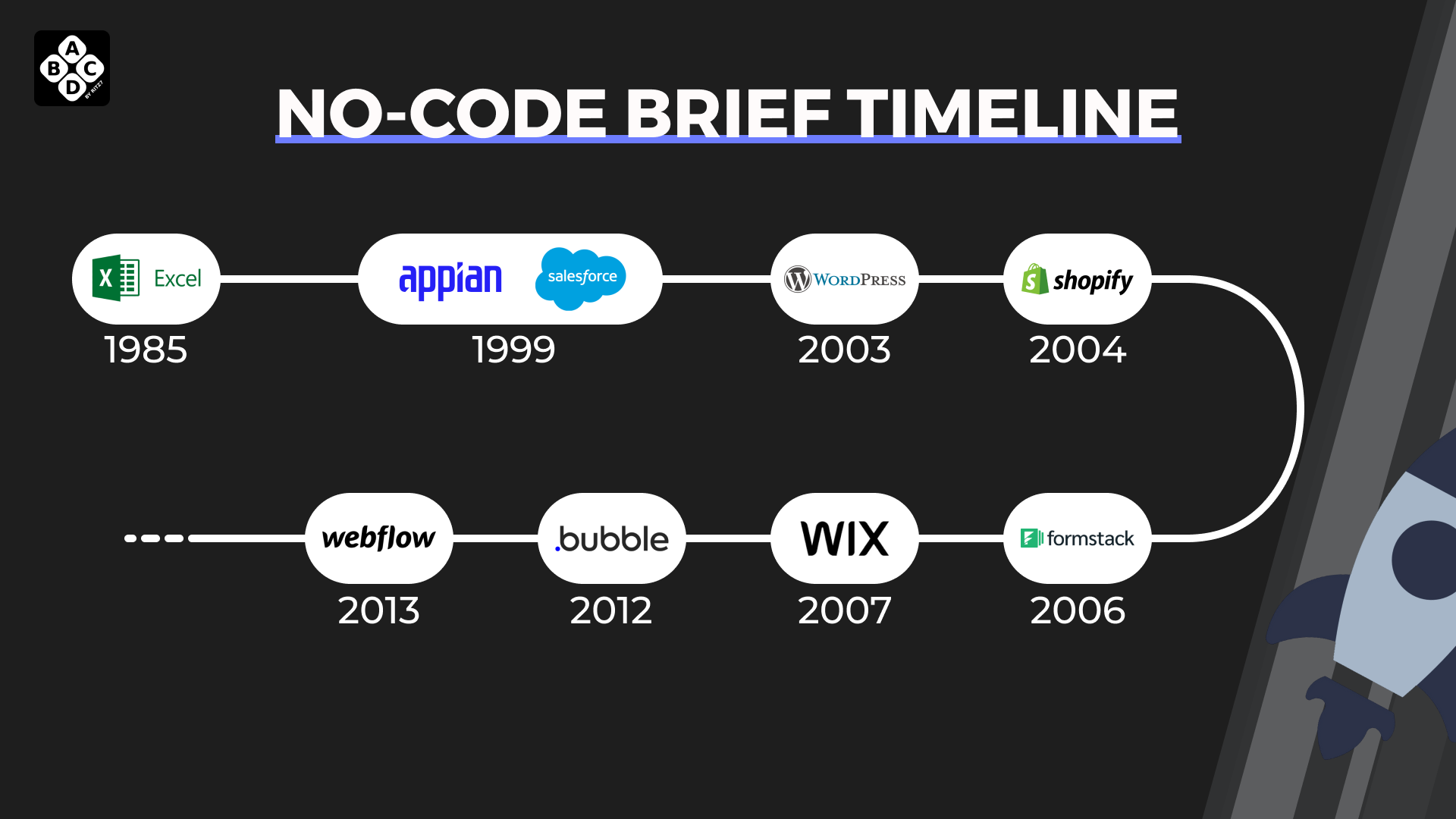
A number of new No Code platforms started getting launched in this period including the much popular Bubble, Webflow, and Wix.
These platforms not only made it easier for people to build websites and applications without even writing a single piece of code but also saved a lot of time and budget spent in the long run to maintain them.
The No Code movement has continued to grow in recent years due to the following -
The increasing popularity of cloud computing
The rise of artificial intelligence
The growing availability of open-source No Code tools.
There are a wide variety of No Code platforms available today, each with its own strengths and weaknesses.
Have you started using No Code yet? If yes, which is your favorite and why? If not, why not?
Subscribe to ABCD today to learn all about No Code ;)